Plants are determinants of environmental, animal, and human health, underpinning nutrition, food security, and healthcare by regulating air, water and soil quality. At the same time, plant systems can also be associated with health risks – for example, plants producing allergenic pollen.
Despite this, One Health – the integrated approach linking human, animal, and environmental health – still struggles to acknowledge plants as active players in ecosystems. The resulting “plant-blindness” risks One Health missing key ecological drivers and prioritising reactive crisis management over resilience.
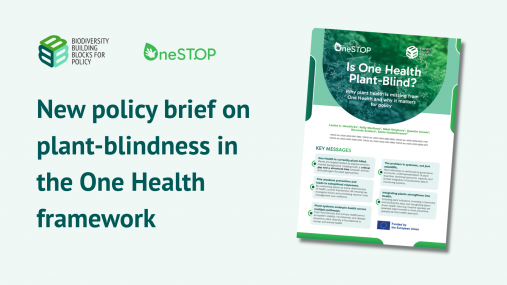
In response to this gap, the EU-funded Horizon projects B-Cubed and OneSTOP published a joint policy brief addressing the role of plants in overall ecosystem and species health and explaining how One Health can move from its current animal and pathogen-focused approaches. Plant-blindness persists due to numerous reasons, such as insufficient taxonomical data integration, lack of plant scientists governing One Health, insufficient investment in taxonomy and difficulty translating plant biodiversity into actionable metrics – issues that are still not seen as interconnected in policy responses.
The policy brief identifies seven policy recommendations, focusing on long-term crisis prevention and resilience, that can help lessen this plant-blindness and its impact.
For starters, the policy brief recommends explicitly integrating plant health and plant metrics, such as genetic diversity, vegetation diversity, and ecosystem integrity in One Health frameworks, instead of considering them as indirect environmental factors. Other suggestions are to invest in plant biodiversity and conservation, while also monitoring invasive plant species and integrating associated health risks into the framework for better disease prevention. Additionally, the brief recommends strengthening interdisciplinary governance by including plant scientists, botanists, ecologists, and biodiversity experts in the decision-making processes, as well as supporting research that translates plant data directly into actionable insights. Finally, to fully integrate plant health into the One Health data systems, the brief suggests aligning with existing initiatives and organisations like B-Cubed and OneSTOP.
If you want to learn more about the role of plants in the ecosystems and how they can be better integrated into One Health, check out the full policy brief on Zenodo and on the Media Centre our website.